

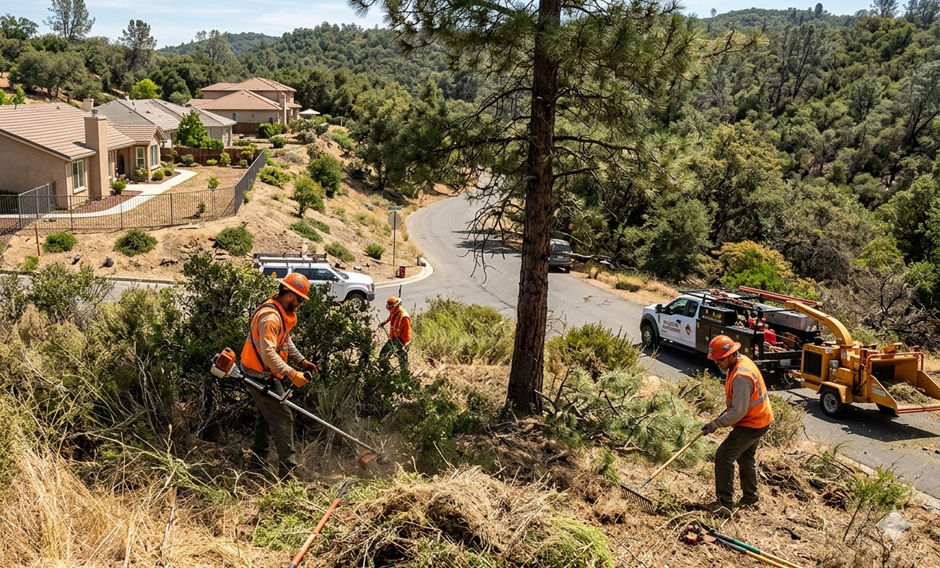
Reflecting the urgency of the state’s wildfire crisis, as demonstrated by the 2025 firestorms in Los Angeles County, California’s leaders established several new opportunities to expedite environmental review of vegetation management projects that reduce wildfire risk. A new statutory exemption established under SB 131 (2025) and Governor Newsom’s March 2025 State of Emergency proclamation authorization build on previous regulatory streamlining tools, including related CEQA exemptions and the statewide programmatic environmental review of vegetation treatment in the California Vegetation Treatment Program (CalVTP) Program EIR. Projects with a federal nexus may also benefit from new and expanded NEPA flexibilities, including new categorical exclusion (CX) adoption procedures and the US Department of Agriculture’s April 2025 Emergency Situation Determination. Here, we provide a comprehensive recap of state and federal environmental compliance pathways, discuss which projects may be eligible for these new opportunities, share some thoughts on when to use each streamlining option, and consider what’s next for wildfire risk reduction project planning.
CEQA Statutory Exemption under SB 131
In June 2025, Governor Newsom signed SB 131 into law, establishing a powerful CEQA statutory exemption for wildfire risk reduction projects. In addition to other CEQA exemptions that address critical environmental planning needs, as detailed in Ascent’s CA 2025 Trailer Bills—A Deep-Dive Series, SB 131 added Section 21080.49 to the California Public Resources Code, which exempts four types of vegetation management projects aimed at reducing wildfire risk from CEQA.
Which projects qualify for the new exemption?
PRC Section 21080.49 exempts four types of wildfire risk reduction projects from CEQA, if the project is in compliance with all other applicable laws. The Governor exempted the following types of projects that protect communities and critical infrastructure:
- Prescribed fire or fuels reduction projects under 50 acres within one-half mile of a subdivision (of 30 or more dwelling units) that are designed to protect biological resources, riparian areas, water quality, and tribal cultural resources. To employ the exemption, agencies must coordinate with California Department of Fish and Wildlife to ensure projects minimize impacts to native plants and wildlife.
- Clearances within 100 feet of public roadways of flammable vegetation or trees under 12 inches diameter at breast height (dbh) identified as an egress and evacuation route for a community (i.e., with 30 or more dwelling units).
- Residential home hardening or defensible space creation within 200 feet of a structure in a high or very high fire hazard severity zone.
- Fuels break establishment, including clearance of flammable vegetation and trees under 12 inches dbh, up to 200 feet from structures.
How does this compare to other streamlining efforts?
This statutory exemption is a powerful exemption for qualifying vegetation treatments that reduce wildfire risk to structures and communities. As a statutory exemption, agencies are only required to explain how the project meets the exemption criteria to comply with CEQA, unlike categorical exemptions, which require a more detailed review and documentation that no exceptions to the exemption would apply to the project under consideration. The continued use of exemptions should be maximized whenever feasible. They offer the quickest path to CEQA compliance, as long as the projects are consistent with an exemption’s qualifying criteria. Documenting that a project qualifies for an exemption may take a matter of days for a statutory exemption, including the new SB 131 statutory exemption, and up to a few months for a categorical exemption, depending on the level of detail of supporting information required by the lead agency.
Other CEQA Exemptions
Vegetation management projects that do not include commercial timber operations may be evaluated for qualification with relevant statutory and categorical exemptions from CEQA.
- PRC Section 4799.05(d): Statutorily exempts wildfire risk reduction projects that have been reviewed under NEPA. Exempts state approved or funded projects located partially or wholly on federal lands.
- PRC Section 21080(b)(3): Statutorily exempts projects that maintain or repair property or facilities damaged or destroyed as a result of a disaster for which the Governor declared a state of emergency. For example, this exemption has been used for the removal of dead and dying trees after a state of emergency (EO B-42-17) was declared in California due to the unprecedented tree mortality crisis.
- PRC Section 21080.56: Statutory Exemption for Restoration Projects (SERP). Statutorily exempts fast-track projects with the primary purpose of protecting/enhancing habitat or aiding the recovery of a species and/or enhancing biodiversity. The project must result in long-term net benefits to climate resiliency, biodiversity, and sensitive species recovery. Wildfire risk reduction projects that are fundamentally ecological restoration projects (e.g., targeted vegetation removal to restore habitat qualities or natural fire regime) should contact CDFW to determine eligibility for this exemption.
- CEQA Guidelines Section 15304. Class 4 Exemption: Minor Alterations to Land: Categorically exempts (Class 4) small-scale or routine projects where significant environmental impacts would not occur. It exempts minor vegetation alterations (can include removal of healthy, mature, scenic trees, if done for forestry purposes). Example projects include fuels management activities to reduce the volume of flammable vegetation within 30 feet of structures, or within 100 feet of structures in areas of extra-hazardous fire conditions, that will not result in take of special-status plant or animal species or in significant erosion and sedimentation of surface waters.
Exemptions for Commercial Timber Operations
Sometimes, vegetation treatment projects for wildfire safety include a commercial timber or biomass transaction component. If commercial timber operations on non-federal timberland (as defined in PRC Section 4526) are proposed, projects are subject to the Forest Practice Act and Forest Practice Rules, which are enforced by CAL FIRE. Exemption harvest documents can be used for projects of limited size and scale, providing the project follows predefined actions and is compliant with the Forest Practice Rules. Typically, exemptions can take a month or two to prepare (depending on exemption type, size, and resource protections), with CAL FIRE granting approval within 10-15 days following plan submission. The following are examples of exemptions used for merchandizing timber or other wood resources generated as a result of fuels reduction projects.
- 14 CCR Section 1038.3: The forest resilience exemption allows for the harvesting of trees, for the purpose of reducing flammable materials to reduce fire spread, duration and intensity, fuel ignitability, or ignition of tree crowns on areas up to 500 acres. Operations are limited to outside of water lake protection zones and other areas with sensitive environmental resources.
- 14 CCR Section 1038(b): Exemption allows for the harvesting of dead trees, dying trees, or diseased trees in amounts less than ten percent of the average forest stand with no operations in water lake protection zones and other environmentally sensitive areas.
- 14 CCR Section 1038(c): Exemption allows for the cutting or removal of trees in compliance with PRC Sections 4290 and 4291, to eliminate vegetative fuels that could spread fire into tree crowns for the purpose of reducing flammable materials and maintaining fuel breaks to reduce fire spread, duration, and intensity.
Governor’s March 2025 State of Emergency Proclamation
As we detailed in a prior AscentShare, Governor Newsom issued a State of Emergency proclamation in March 2025 to expedite critical, near-term fuels reduction projects that protect communities and reduce severe risks of catastrophic wildfire. The proclamation suspends requirements under CEQA and several other state environmental statutes and regulations for qualifying critical, near-term fuels reduction projects under 3,000 acres that create strategic fuel breaks, build community defensible space, or establish safer travel routes or reduce roadside ignitions, or for prescribed fire/cultural burning, projects that remove hazard trees, and projects that maintain previously established fuels reduction projects Projects that rely on the proclamation to suspend specific state requirements must comply with the , which sets specific measures to minimize impacts to environmental resources. Applicants may submit qualifying projects through the online portal through May 1, 2026. Preparing a project request for concurrence with the use of the suspension and consultation with authorizing state agencies may take up to several months. All relevant federal environmental statutes and regulations still apply.
CalVTP Program EIR
Projects that do not qualify for these statutory or categorical exemptions from CEQA or approval through the Emergency Proclamation may benefit from streamlined compliance through the CalVTP Program EIR. Regional-scale, long-term programs for vegetation treatments range from several thousand acres to over 100,000 acres. Use of the CalVTP Program EIR is the most cost-effective streamlining process for large projects on a per-acre cost basis. The EIR programmatically analyzes prescribed burning, mechanical treatments, manual treatments, herbicide application, and prescribed herbivory as treatment activities to reduce hazardous vegetation around communities in the wildland-urban interface, to construct shaded or non-shaded fuel breaks, and to promote forest health and ecological restoration. Project proponents can comply with CEQA for applicable wildfire resilience projects through streamlined PSAs that rely on the broader, statewide analysis in the CalVTP Program EIR. Preparation of a project-specific analysis (PSA) under the CalVTP and approval of the vegetation treatment project typically involves 6–9 months. This program provides long-term CEQA coverage of initial and maintenance vegetation treatments, creating opportunities for grant funding, comprehensive large-scale planning, and flexible regional prioritization.
As directed by the Governor’s 2025 Emergency Proclamation, the Board of Forestry and Fire Protection is updating the CalVTP Program EIR to increase the CalVTP’s efficiency and usefulness to continue employing its rapid project-level environmental review for large wildfire risk reduction treatments. Specifically, the updated CalVTP Subsequent Program EIR incorporates biomass disposition (for cost recovery), recognizes the interconnectedness of cultural resource protection and ecological restoration through integration of Indigenous Knowledge, clarifies standard project requirements and mitigation measures, and increases the efficiency of subsequent project-specific analyses. The CalVTP Update will also expand the coverage of the CalVTP Subsequent Program EIR beyond the State Responsibility Area to nearly all nonfederal lands, including the Local Responsibility Area, an increase of over 15 million acres.
NEPA Efficiencies
In addition to the broader statutory and regulatory changes to NEPA and its implementing regulations that may streamline agency approvals, several new efficiencies established or furthered in 2025 specifically help expedite wildfire resiliency and ecosystem health projects.
Categorical Exclusion Adoptions
Under Section 109 of the June 2023 Fiscal Responsibility Act’s amendments to NEPA (codified at 42 USC 4336c), federal agencies now have broad statutory authority to adopt CX categories established by other agencies. Previously, to administratively establish a CX category, agencies were required to complete a lengthy administrative review process to document that certain types of projects generally do not have potentially significant impacts—a process that often took several years. In 2025, under this new authority, federal agencies adopted hundreds of CX categories to help expedite approval of priority discretionary actions.
An important focus of many agencies’ CX adoptions has been improving ecosystem resilience and reducing accumulated fuels. For example, in September 2025, the BLM adopted two CX categories established by the Tennessee Valley Authority and one CX category established by the US Forest Service that cover vegetation management activities that improve ecosystem resilience (90 FR 42432). Decision-makers across the BLM may now review and approve qualifying projects using these adopted CX categories, after determining that no extraordinary circumstances necessitate additional review, instead of preparing detailed environmental assessments or environmental impact statements. As agencies continue to adopt CX categories, additional vegetation management activities will become eligible for such streamlined reviews.
Other Notable NEPA Categorical Exclusions
Newly adopted CX categories build on previous agency-specific CXs for vegetation management projects that reduce fuels and improve ecosystem health resilience. One particularly notable CX, under which dozens of projects on federal lands in California were approved in 2025, is the US Forest Service and the BLM’s linear fuel breaks categorical exclusion established by the Infrastructure Investment and Jobs Act (PLL 117-58) in November 2021. To qualify, projects must be intended to reduce the risk of uncharacteristic wildfire on federal land and must follow existing linear features, such as roads, water infrastructure, transmission and distribution lines, and pipelines. Projects may be up to 1,000 feet in width, must be contiguous with or incorporate these linear features, and must be no larger than 3,000 acres. Specific project activities may include manual and mechanical thinning, masticating, herbicide application, and prescribed burning.
Forest Service and BLM decision-makers authorize projects using this streamlined NEPA process, following review of extraordinary circumstances. Together, these two agencies administer approximately 35 million acres of land in California, making this CX a powerful tool for federal land managers to improve wildfire resiliency across the state.
April 2025 US Forest Service Emergency Designation
On April 2025, Secretary Rollins issued Secretary’s Memorandum 1078-006, making an Emergency Situation Determination, consistent with Section 40807 of the Infrastructure Investment and Jobs Act, across nearly 67 million acres of National Forest system lands that are rated as very high or high wildfire risk. This determination also applies to nearly 79 million acres of National Forest system lands that are experiencing declining forest health and are at risk of increased tree mortality from insect and disease infestation, or containing hazard trees posing an imminent risk, consistent with Section 602 of the Healthy Forest Restoration Act. To address the emergency, the Forest Service may carry out specific vegetation management activities, including hazardous fuels removal, commercial and noncommercial harvest, tree salvage, and restoration of water sources or infrastructure (including watersheds).
Environmental assessments or environmental impact statements that analyze these activities are only required to analyze the proposed action and no action alternatives, and projects approved under this authority are not subject to project-level pre-decisional administrative remedies (commonly known as the objection period). This opportunity is therefore most useful for larger projects or for projects in environmentally sensitive areas that may not qualify for review under categorical exclusions. Such projects may therefore be authorized on an expedited timeline to reduce wildfire risks to natural resources on National Forest system lands and to nearby communities.
Other Regulatory Efficiencies
Beyond these CEQA and NEPA streamlining efforts, other regulatory agencies are developing tools that expedite approval of vegetation treatment projects, including those designed to improve ecosystem health and reduce wildfire risk. The following bullets provide two examples of regulatory streamlining tools.
- California Department of Fish and Wildlife’s Restoration Management Permit: This permitting process consolidates five of the most common CDFW authorizations typically needed for restoration projects into a single, streamlined approval. Qualifying restoration projects, which can include forest health and wildfire resilience projects, are expected to have a substantial net benefit to native wildlife, plants, or their habitat.
- California Forest Conservation Plan: Using a phased approach, the US Fish and Wildlife Service is developing this General Conservation Plan to accelerate Endangered Species Act compliance for forest fuels reduction projects, while balancing the needs of wildlife with these projects, and applying consistent wildlife conservation actions across public and private lands in California.
What’s Next?
As land managers work to address a legacy of fire suppression, fuels buildup, and unhealthy forest conditions, exacerbated by drought, disease, and climate change, Californians continue to face an elevated risk of catastrophic wildfire. We expect to see additional regulatory flexibilities that enable efficient and expedited implementation of fuels reduction projects to proactively mitigate this risk. During 2026, in addition to the updated CalVTP Subsequent Program EIR, the California Wildfire & Forest Resilience Task Force (now operating under the January 2021 Action Plan) plans to release an updated Action Plan guiding the state’s approach to improving wildfire resilience of the built and natural environments. Legislators have introduced a substantial package of additional 2026 bills related to the state’s wildfire crisis. The landscape of expedited environmental review and regulatory compliance strategies will continue to shift in 2026 and beyond.
Please reach out to Katie Flahive, Alex Herr, or Lara Rachowicz at Ascent with any questions about statutory and categorical CEQA exemptions, Forest Practice Act exemptions, the Emergency Proclamation, the CalVTP Program EIR, NEPA efficiencies, or other regulatory efficiencies to expedite critical wildfire risk reduction work.