

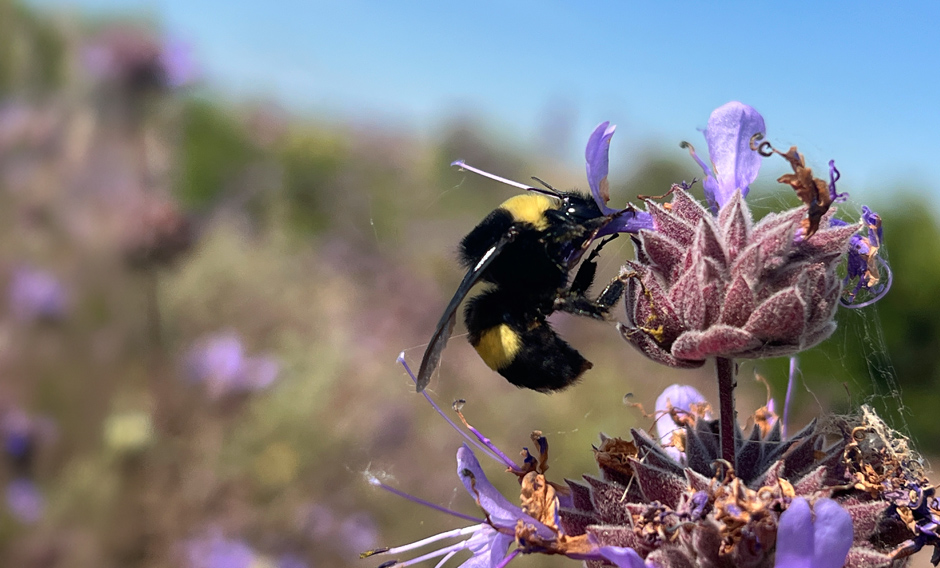
As of June 12, 2019, the California Department of Fish and Wildlife (CDFW) identified four bumble bee species—Crotch’s bumble bee (Bombus crotchii), Franklin’s bumble bee (Bombus franklini), western bumble bee (Bombus occidentalis), and Suckley’s cuckoo bumble bee (Bombus suckleyi) —as candidates for listing under the California Endangered Species Act (CESA) after reviewing a 2018 petition and completing an evaluation report. During CESA candidacy, these species receive the same take protections as listed species. Therefore, when potential impacts have been identified for proposed projects, project proponents must implement measures to minimize the potential for take. When incidental take is likely to be unavoidable, projects must, in most cases, apply for and obtain an incidental take permit (ITP) from CDFW before commencing relevant project activities.
In 2023, CDFW issued guidance on habitat assessment and survey protocols for the candidate bumble species. CDFW recently released a nonregulatory guidance document detailing the ecology, life history, avoidance and minimization measures, and habitat management strategies for CESA-candidate bumble bees. The information in the 2026 document should not be interpreted as mandatory standards; rather, the document is intended to inform project planning; provide examples of measures that may be used to avoid, minimize, or mitigate impacts associated with projects and ITPs; and support the conservation of these species.
The new guidance document summarizes current knowledge on the ecology and life history of each of the four CESA-candidate bumble bee species. The table below summarizes the distribution, habitat requirements, and seasonality of each species. More detailed information about each species is available in the guidance document.
| Crotch’s bumble bee | Franklin’s bumble bee | Western bumble bee | Suckley’s cuckoo bumble bee | |
|---|---|---|---|---|
| Distribution | Historically large range extending from Redding through central parts of California into northern Baja California. | Limited to narrow area in northern California and southern Oregon between the Coast Range, Sierra Nevada, and Cascade Range. Last detected in California in 1998 and has not been seen since 2006. | Historically widespread west of the Rocky Mountains. Currently restricted to high elevations in the Sierra Nevada, some sightings along the Northern California coast. | Historically widespread, now rare. A nest parasite, so range could potentially overlap those of Bombus occidentalis, Bombus rufocinctus, Bombus fervidus, Bombus nevadensis, and Bombus appositus. |
| Habitat | Primarily grasslands. Has been documented in open grasslands, shrublands, chaparral, desert margins (including Joshua tree and creosote scrub), and semi-urban. | Grasslands and montane meadows. | Mountain meadows, shrubland, grassland, chaparral, and coastal areas. | Foraging habitat is mostly western meadows, including mountainous areas. A nest parasite, found only where host species are also found. |
| Seasonality | Colony active period: March–August. | Flight season mid-May to end of September. | Colony active period between April and September. | Flight period mid-May–October (females), early July–late September (males). |
In general, when habitat for bumble bees is not present, the species are considered to have no potential to occur, and therefore, no further surveys or avoidance or minimization measures are needed. However, when habitat is present, careful evaluation is needed to determine whether seasonal avoidance is appropriate to avoid impacts, whether surveys should be conducted, or whether a take permit is necessary. The absence of bees during surveys does not necessarily establish that a project would have no potential to affect the species.
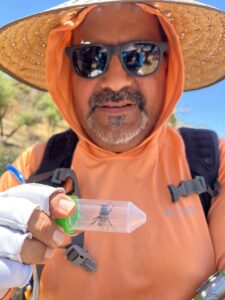
Suitable avoidance and minimization measures are linked to different stages of the bumble bee life cycle: queen flight season, colony active period, gyne (newly emerged queens) flight season, and overwintering period. In eusocial species, individual bees are divided into reproductive (queens and drones) or nonreproductive (workers) roles. The reproductive females (queens) mate with reproductive males (drones) during the late summer/fall season, after which the gynes hibernate through winter and emerge in spring to establish new colonies. Nest parasites, like Suckley’s cuckoo bumble bee, do not establish their own nests, but take over active colonies of other species by killing the queen and letting the workers raise their own young. The avoidance of reproductive queens (queen flight season) and nests containing both queens and workers (colony active period) is essential because these life stages represent the future reproductive capacity of the colony. Surveys and seasonal work restrictions during the queen flight season and colony active period may help avoid or minimize impacts on the species. The new CDFW guidance document also provides detailed steps for consideration on avoiding nesting, foraging, and overwintering habitat, and determining nest senescence.
Very little is known about how or where bumble bee queens overwinter. During this phase, the queens overwinter alone and enter a period of inactivity (diapause), which makes them very difficult to detect. Overwintering bees may be hidden underground in soil, under leaf litter, or in small crevices, which makes avoidance infeasible if ground-disturbing and clearing activities take place in overwintering habitat during this period. The new CDFW guidance document gives recommendations to conduct surveys in and adjacent to the disturbance area during the colony active period when bees are more easily detected and lists the avoidance periods and actions when hibernating bees are uncovered during project activities.
The new guidance document also provides useful best management practices for habitat management strategies, including mowing, pesticide use, grazing, prescribed fire, and managed bees, and recommendations for the creation and enhancement of foraging, nesting, and overwintering habitat. Early evaluation of habitat and potential project impacts can help project proponents and land managers identify feasible avoidance measures before project schedules and designs are finalized and determine whether additional surveys or take authorization may be needed.