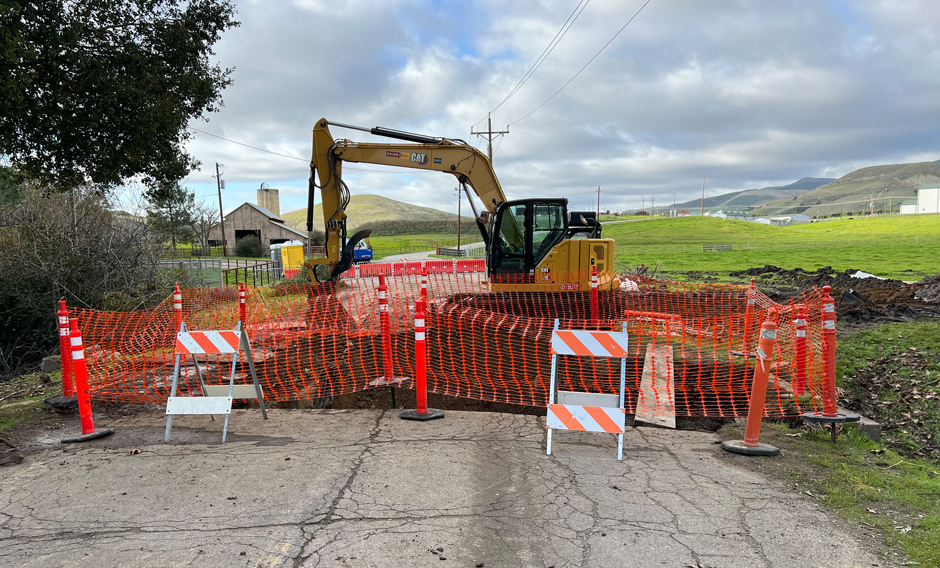
Preparing for a Forecasted Strong El Niño Season
How Are Emergencies Defined?
When weather conditions or other events lead to an unforeseen threat to infrastructure or safety, project proponents must first evaluate whether the conditions could qualify the corrective actions as emergency projects for authorization under applicable local, state, and federal regulations. Most often, authorization is required from:
- the local California Environmental Quality Act (CEQA) lead agency,
- the US Army Corps of Engineers (USACE),
- the Regional Water Quality Control Board (RWQCB),
- the California Department of Fish and Wildlife (CDFW), and/or
- the California Coastal Commission, for projects in the Coastal Overlay Zone.
The regulatory authority for agencies often differ, so having a technical expert assess the resources present as early as possible is an important step in identifying which agencies will need to provide coverage. This article focuses specifically on emergency project activities that would result in impacts on or discharge to aquatic resources (i.e., waters of the United States and/or state), although other environmental resource considerations can apply as well.
For local agencies, the California Code of Regulations Section 15269 defines the types of emergency projects that are exempt from the CEQA process and generally authorizes public or private projects with specific actions to prevent or mitigate emergencies. Specifically, the California Public Resources Code Section 21060.3 defines an emergency as:
a sudden, unexpected occurrence that involves a clear and imminent danger, demanding immediate action to prevent or mitigate the loss of, or damage to, life, health, property, or essential public services.
CDFW also uses this Public Resource Code definition within Fish and Game Code Section 1610.
USACE similarly allows division engineers to authorize special permit processing procedures in emergency situations, defined as (33 Code of Federal Regulations 325.2[e][4]):
a situation which would result in an unacceptable hazard to life, a significant loss of property, or an immediate, unforeseen, and significant economic hardship if corrective action requiring a permit is not undertaken within a time period less than the normal time needed to process the application under standard procedures.
For nearly every agency, emergency conditions are generally unexpected and require immediate action to remedy hazardous conditions. This urgent need for corrective action allows the project proponent to bypass the standard permit process and its associated timelines, using a streamlined regulatory pathway instead. To expedite emergency project approvals for qualifying projects that may discharge dredged or fill material into waters of the United States, USACE uses Regional General Permits (RGPs), issued for specific geographic areas. Some applicable RPGs for emergency projects are:
Each of these RGPs has also been certified under Clean Water Act (CWA) Section 401 by the respective RWQCB.
All three emergency RGPs only authorize corrective actions that are the minimum necessary to alleviate the immediate emergency. Whether upgrades or additional impacts beyond that minimum are allowed depends on the nature of the emergency and the region where the project is located. If corrective actions beyond the minimum necessary are considered, discussion with regional regulatory staff before work occurs is important.
When Do I Notify?
Once the project team has determined that the corrective actions qualify as an emergency project and has identified the resources that could be affected, the appropriate regional agency staff at USACE and RWQCB must be notified prior to the initiation of the emergency work. This notification ideally comes in the form of an application package containing the required forms, pre-construction photographs, and other documentation required by each agency, sent by email, followed by a phone call to the applicable agency director(s). Both email and phone contact are recommended, but the notification must be made by “verifiable means,” typically no less than 48 hours prior to the start of work. This pre-work notification gives agency staff the opportunity to express any immediate concerns regarding the project’s qualifications as an emergency, or to share recommended measures to minimize or avoid impacts on sensitive resources.
Differing from the federal procedures, the CDFW process allows for an after-the-fact notification of lake or streambed alteration resulting from qualifying emergency work. This must occur through the agency’s Environmental Permit Information Management System (EPIMS) Portal within 14 days of the initiation of emergency work. To allow emergency projects to proceed as quickly as possible, the pre-construction information required by CDFW for notification is substantially less than what is necessary under a standard permit process. Deference is often given to engineering or technical specialists to determine the capacity of their assets and assess the risks those assets may face from predicted threats, such as forecasted weather events. However, these determinations must be substantiated through “after-the-fact” reporting that includes detailed records on emergency conditions and technical analysis used to declare the emergency action.
Post-construction reporting deadlines vary by agency:
- USACE (RGP 63, RGP 5). The post-construction report is due within 45 days of completing emergency work.
- USACE (RGP 8). The post-construction report is due within 30 days of completing emergency work.
- RWQCB. The Notice of Completion (Attachment E form) due within 45 days of completing emergency work; this required under all three emergency RGPs.
- CDFW. A one-time notification is due within 14 days of starting emergency work, if any lake or streambed alteration has or will occur
Keeping detailed documentation of the emergency project’s progress throughout is vitally important, both to avoid data gaps in these after-the-fact reports and to maintain trust with the regulatory agencies overseeing the project. Project proponents should also check current CDFW and RWQCB fee schedules for each agency to determine the emergency application fee necessary for each submittal (currently only RWQCB charges a filing fee for these emergency projects).
Key Considerations
When evaluating these projects, it is important to consider the difference between urgent, short-term actions taken to alleviate emergency conditions and long-term, extensive project work that would go beyond what is necessary to relieve those conditions. This distinction exists to provide streamlined approvals for true risks to life, property, or essential public services. Emergency permitting processes are not intended to incentivize last-minute planning for projects that could have been processed under standard permitting procedures but instead developed into emergencies due to deferred action.
Because of this, project proponents must be diligent about demonstrating, during both the pre-notification and post-impact reporting phases, that the planned work responds to a sudden, unexpected, and imminent threat, and about being clear on the project solution being proposed. To document compliance with this emergency standard, proponents are encouraged to keep a log during the initial identification stages that records:
- when the emergency was detected,
- any weather or other event forecasts affecting emergency conditions,
- a written analysis of how the conditions developed, and
- pre-construction photographs.
It is also beneficial to have engineering team member(s) prepare a brief summary or memorandum (with exhibits, if feasible) that provides the technical justification for why the proposed methods are being used and how they meet the “minimum necessary” criteria.
Planning Ahead
Navigating the various regulatory steps in this emergency process can appear daunting, particularly if your team is using it for the first time. Conducting evaluations of assets early, ahead of potentially strong storm seasons, such as an El Niño, can allow project proponents determine whether qualifying conditions have developed as a result of the forecasted event or whether the conditions are the result of deferred action or maintenance. Certain projects may even be exempt from agency permit requirements altogether, depending on the nature and extent of the work proposed.
The regulatory pathways described here exist to allow critical project activities to move quickly when life, property, or essential services are under immediate threat. Realizing the advantages of these streamlining tools, however, depends on a comprehensive grasp of the guiding regulations, the agencies that oversee them, and the importance of timely notification and project documentation. Closely tracking forecasted weather events and having a clear implementation strategy in place before emergency conditions develop are what allow projects to succeed.
Scott Gressard and Linda Leeman, along with Ascent’s natural resources team, work with project proponents on both emergency permitting and proactive readiness planning for vulnerable assets.